Fen Bilimleri 8. Sınıf Yaprak Testler – CEVAP ANAHTARLARI

Ortaokul 8. Sınıf LGS Fen Bilimleri Yaprak Testler Cevap Anahtarı

Bu sayfada Ortaokul 8. Sınıf LGS sınavı ile ilgilenenler ve LGS sınavına girecek öğrencilere yönelik Fen Bilimleri Testleri konusunda yadımcı olacak ücretsiz testler ve cevap anahtarları bulacaksınız.

Türkiye’deki yaygın bir algıya göre iyi bir üniversite okursanız iyi bir iş sahibi olursunuz. İyi bir üniversite okumak için de iyi bir liseye gitmeniz gerekir.

Bu iyi liselere gitmek için de LGS – Liselere Geçiş Sistemi (LGS) ile bir sınava girmeniz gerekir.

Aslında bu çok geniş bir alandır. Adeta fengezegeni olarak bile adlandırabiliriz. Bu sayfada ortaokul 8.sınıf baz alınarak sorular hazırlanmıştır.

İyi bir lise kazanmak için lgs soruları üzerinde ciddi çalışmak gerekir. Burada 8. sınıf test konusunda yeni nesil sorular yer almaktadır, çıkmış sorular ile karşılaştırmalar yapılabilir, lgs soru dağılımı kontrol edilebilir.

Bu sayfadaki 8. sınıf testleri;

  1. Ünite mevsimler ve iklim test,
  2. Ünite dna ve genetik kod test,
  3. Ünite basınç test,
  4. Ünite madde ve endüstri test,
  5. Ünite basit makineler testti bulunmaktadır.

Bu sayfada 6. ünite ve 7. ünite testleri henüz bulunmamaktadır.

Öğretmenlerimizden bu ünitelerle ilgili test çalışması yapan olursa burada yayınlamaktan büyük bir mutluluk duyarız.

Tabii ki iyi bir lise diye kendinizi de fazla kasmamanız ve yıpratmamanız gerekir. Sadece doğal bir şekilde ve sistematik olarak çalışırsanız inanıyoruz ki hedefinize ulaşırsınız. Ancak hedefinize ulaşamazsanız bu dünyanın sonu demek değildir.


LGS Sınavı ile ilgilenenler ve LGS sınavına girecek öğrenciler için

Bu sayfada Ortaokul 8. Sınıf LGS sınavı ile ilgilenenler ve LGS sınavına girecek öğrencilere yönelik yadımcı olacak ücretsiz testler ve cevap anahtarları bulacaksınız.

LGS – Liselere Geçiş Sistemi (LGS)

Liselere Geçiş Sistemi (LGS), Türkiye’de Millî Eğitim Bakanlığı tarafından 2017-2018 eğitim öğretim yılı ile uygulanmaya başlanan ve her yıl yapılan ilköğretimden ortaöğretime geçiş sınavı sistemidir ve Ortaokul 8. Sınıf öğrencileri bu sınava girmektedir. 

LGS, TEOG sınavının yerine geçmiştir.

LGS’de çıkan sorularının çözümüne yardımcı olmak üzere bu testler hazırlanmış ve ücretsiz bir şekilde, öğrencilerin, bu sınava çalıştıran öğretmenlerin, velilerin ve idarecilerin kullanımına açılmıştır.

LGS’ye girecek tüm Ortaokul 8. Sınıf öğrencilerimize, onları çalıştıran öğretmenlerine, velilere ve idarecilere dersdunyasi.net ailesi olarak başarılar diliyoruz.


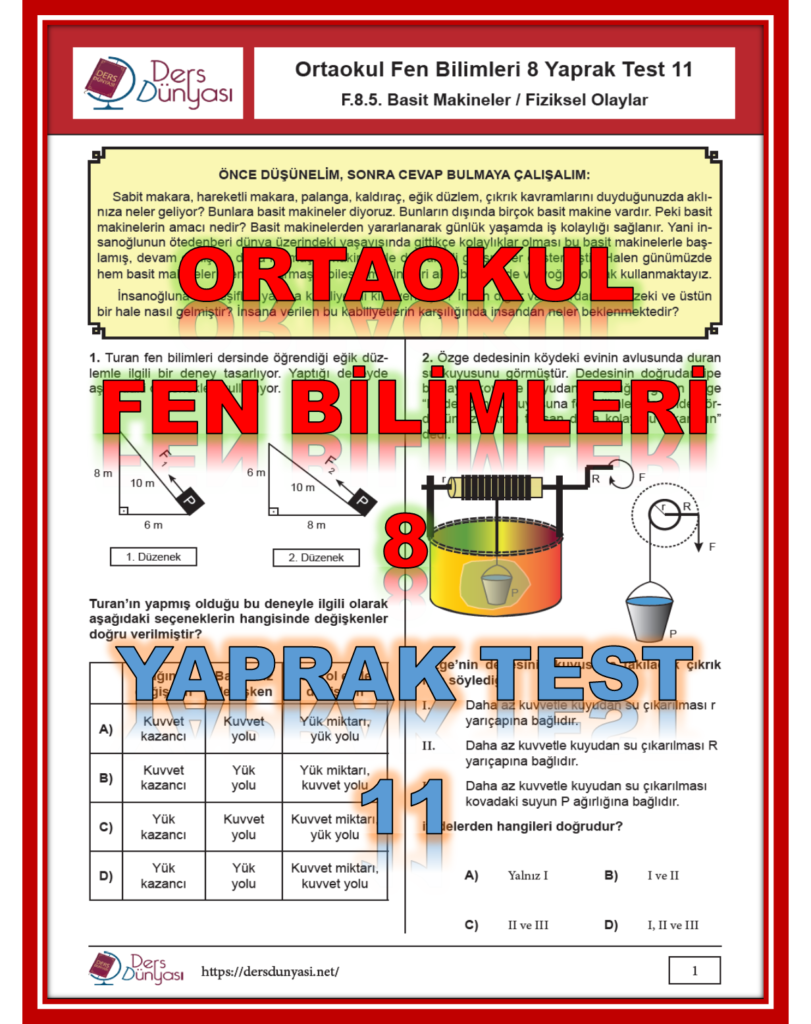
Yaprak Test 11 CEVAP ANAHTARI – Basit Makineler / Fiziksel Olaylar

Yaprak Test 10 CEVAP ANAHTARI – Basit Makineler / Fiziksel Olaylar

Yaprak Test 9 CEVAP ANAHTARI – Madde ve Endüstri / Madde ve Doğası

Yaprak Test 8 CEVAP ANAHTARI – Madde ve Endüstri / Madde ve Doğası

Yaprak Test 7 – Madde ve Endüstri / Madde ve Doğası – CEVAP ANAHTARI

Yaprak Test 6 – Basınç / Fiziksel Olaylar – CEVAP ANAHTARI

Yaprak Test 5 CEVAP ANAHTARI – Basınç / Fiziksel Olaylar

Yaprak Test 4 CEVAP ANAHTARI – DNA ve Genetik Kod / Canlılar ve Yaşam

Yaprak Test 3 – CEVAP ANAHTARI – DNA ve Genetik Kod / Canlılar ve Yaşam

Yaprak Test 2 CEVAP ANAHTARI – Mevsimler ve İklim / Dünya ve Evren

Yaprak Testi 1 CEVAP ANAHTARI – Mevsimler ve İklim / Dünya ve Evren


Ortaokul 8. Sınıf LGS Fen Bilimleri Yaprak Testler

Fen Bilimleri 8. Sınıf Basınç Fiziksel Olaylar Yaprak Test 5

Bu sayfada Ortaokul 8. Sınıf LGS sınavı ile ilgilenenler ve LGS sınavına girecek öğrencilere yönelik Fen Bilimleri Testleri konusunda yadımcı olacak ücretsiz testler bulacaksınız.

Türkiye’deki yaygın bir algıya göre iyi bir üniversite okursanız iyi bir iş sahibi olursunuz. İyi bir üniversite okumak için de iyi bir liseye gitmeniz gerekir.

Bu iyi liselere gitmek için de LGS – Liselere Geçiş Sistemi (LGS) ile bir sınava girmeniz gerekir.

Aslında bu çok geniş bir alandır. Adeta fengezegeni olarak bile adlandırabiliriz. Bu sayfada ortaokul 8.sınıf baz alınarak sorular hazırlanmıştır.

İyi bir lise kazanmak için lgs soruları üzerinde ciddi çalışmak gerekir. Burada 8. sınıf test konusunda yeni nesil sorular yer almaktadır, çıkmış sorular ile karşılaştırmalar yapılabilir, lgs soru dağılımı kontrol edilebilir.

Bu sayfadaki 8. sınıf testleri;

  1. Ünite mevsimler ve iklim test,
  2. Ünite dna ve genetik kod test,
  3. Ünite basınç test,
  4. Ünite madde ve endüstri test,
  5. Ünite basit makineler testti bulunmaktadır.

Bu sayfada 6. ünite ve 7. ünite testleri henüz bulunmamaktadır.

Öğretmenlerimizden bu ünitelerle ilgili test çalışması yapan olursa burada yayınlamaktan büyük bir mutluluk duyarız.

Tabii ki iyi bir lise diye kendinizi de fazla kasmamanız ve yıpratmamanız gerekir. Sadece doğal bir şekilde ve sistematik olarak çalışırsanız inanıyoruz ki hedefinize ulaşırsınız. Ancak hedefinize ulaşamazsanız bu dünyanın sonu demek değildir.


Yaprak Testler – CEVAP ANAHTARLARI


Yaprak Test 11 – Basit Makineler / Fiziksel Olaylar

Yaprak Test 10 – Basit Makineler / Fiziksel Olaylar

Yaprak Test 9 – Madde ve Endüstri / Madde ve Doğası

Yaprak Test 8 – Madde ve Endüstri / Madde ve Doğası

Yaprak Test 7 – Madde ve Endüstri / Madde ve Doğası

Yaprak Test 6 – Basınç / Fiziksel Olaylar

Yaprak Test 5 – Basınç / Fiziksel Olaylar

Yaprak Test 4 – DNA ve Genetik Kod / Canlılar ve Yaşam

Yaprak Test 3 – DNA ve Genetik Kod / Canlılar ve Yaşam

Yaprak Test 2 – Mevsimler ve İklim / Dünya ve Evren

Yaprak Test 1 – Mevsimler ve İklim / Dünya ve Evren


ÖZEL DERSLER

[smartslider3 slider=”20″]


EĞİTİM ARAÇLARI

Bu sayfada tüm eğitim kademelerini içine alan Okulöncesi, İlkokul, Ortaokul, Ortaöğretim / Lise, Üniversiteye Hazrlık, Üniversite ve Hayat Boyu Öğrenme başlıkları yer almaktadır.

Bu kademelerde ,yayınlanmış ve yayına hazır ders kitapları, eğitim araçları, yaprak testleri, deneme sınavları, ders videoları, makaleler, sunular, posterler, sesli ve görüntülü ders anlatımları vb. örnekler verilecektir.


On Islamic Dress for Women The Twenty Fourth Flash

On Islamic Dress for Women The Twenty Fourth Flash

The Twenty-Fourth Flash

On Islamic Dress for Women

While being the Second and Third Matters of the Fifteenth Note, this treatise was made the Twenty-Fourth Flash because of its importance.

In the Name of God, the Merciful, the Compassionate.

O Prophet! Tell your wives and daughters, and the believing women, that they should cast their outer garments over their persons when abroad to the end of the verse.(33:59)

This verse enjoins the veiling of women. However, dissolute civilization opposes this command of the Qur’an; it does not consider the veiling of women to be natural and says it is slavery of a sort.1

T h e  A n s w e r : We shall explain only four of the many instances of wisdom in this injunction of the Qur’an, showing that it is entirely natural and those who oppose it are opposing the innate disposition of women.

FIRST INSTANCE OF WISDOM

To veil themselves is natural for women and their innate dispositions demand it. For women are weak and delicate, and since they are in need of a man’s protection and help for themselves and for their children whom

http://www.erisale.com/index.jsp?locale=en#content.en.203.254

they love more than their own lives, they have a natural desire to make themselves loved and not loathed, and not to be rebuffed.

Also, seven out of ten women are either old or ugly and they do not want to show their age or unsightliness to everyone. Or they are jealous, and they do not want to appear ugly in relation to others who are more beautiful. Or they are frightened of assault or aspersions, and want by nature to cover themselves so as not to suffer assault, nor to be accused of unfaithfulness by their husbands. If noted carefully, it is seen that it is the elderly who hide themselves most. While only two or three out of ten women are both young and beautiful and do not feel uncomfortable at displaying themselves.

It is clear that people are discomforted at being looked at by people they do not like or find tedious; they are upset by it. If a beautiful immodestly dressed woman takes pleasure at two or three out of ten men who are canonically strangers looking at her, she is bored by the seven or eight. Also, since a woman with uncorrupted morals is sensitive and easily affected, she will certainly be distressed at dirty looks whose effects have been physically experienced, indeed, are poisonous. We even hear that in Europe, the place of open dress, many women are fed up at being the object of attention, and complain to the police, saying: “These brutes keep staring at us and disturbing us.” This means that present-day civilization’s unveiling women is contrary to their natures, while the Qur’an’s command to veil themselves is both inconformity with women’s natures, and saves them – those mines of compassion who may be worthy companions for all eternity – from degeneration, degradation, what is in effect slavery and wretchedness.

Furthermore, by nature women are fearful of men who are strangers, and are anxious at them. Fear naturally demands the veiling of women. For in addition to suffering the difficulty of bearing the load of a child for eight or nine months, which certainly embitters the eight or nine minutes’ pleasure, there is the possibility of suffering the calamity of bringing up a child for eight or nine years without protector. Since this happens frequently, by creation they truly fear strange men and by nature want to hide themselves from them. Being weak, their creation demands that through veiling themselves they do not excite the appetites of men outside the stipulated degrees of kinship, nor allow any opportunity for assault; their weak creation gives powerful warning. It shows that their cloaks and coats are shields and fortresses. The fact that, according to news received, the bare-legged wife of a high-ranking man in the world was accosted in the country’s capital, in the market-place in daylight in front of everyone by a common shoe-shiner, deals a slap in the shameless faces of those opposed to the veiling of women!

http://www.erisale.com/index.jsp?locale=en#content.en.203.255

SECOND INSTANCE OF WISDOM

The geniune, intense relationship, love, and affection between men and women do not arise only from the needs of worldly life. Yes, a woman is a companion to her husband not only in this worldly life, she is his companion in eternal life too. Since she will be her husband’s companion in eternal life, she surely should not attract the looks of others besides her husband, her everlasting friend and companion, and should not offend him and make him jealous. In consequence of the mystery of belief, her believing husband’s relations with her are not confined to this worldly life and his love is not only animal and temporary, so long as her beauty lasts; he holds true, earnest love and respect for her because she will be his companion in eternal life. And he bears that love and respect for her, not only during her youth when she is beautiful, but also when she is old and unsightly. Certainly in return for this, she should show her beauties to him alone and restrict her love to him; this is demanded by humanity. Otherwise she would gain very little and lose much.

According to the Shari‘a, the husband should be a good match for the wife. That is, they should be suitable to one another. The most important aspect of this is with a view to religion.

Happy the husband who sees the wife’s firm religion and follows her, and himself becomes pious in order not to lose his companion of eternal life.

Happy the wife who sees her husband’s firmness in religion and becomes pious so as not to lose her eternal friend.

Alas for the man who becomes dissolute, which will lose him for ever that righteous woman.

Alas for the woman who does not follow her pious husband and loses her eternal blessed friend.

And a thousand woes on the unhappy husband and wife who imitate each other in sin and vice, helping one another to enter Hell-fire!

THIRD INSTANCE OF WISDOM

Happy family life is perpetuated through mutual confidence between husband and wife, and heartfelt respect and love. Immodest dress and free-and-easy behaviour destroy the confidence, and spoil the mutual respect and love. For out of ten women who favour immodest dress only one will not try to make herself liked by strangers because she does not find other men more attractive than her husband. Nine will find others better than their husbands. And only one out of twenty men will not find other women

http://www.erisale.com/index.jsp?locale=en#content.en.203.256

more attractive. Then besides the true love and mutual respect disappearing, it may arouse extremely ugly and base feelings, as follows:

By nature, men do not feel any lust towards those within the stipulated degrees of kinship like their sisters, because, since such relatives’ faces induce kindness and licit love due to their close kinship, it nullifies any sexual or lusty inclinations. But to leave uncovered parts of the body which according to the Shari‘a it is not permissible to expose to close relatives like the legs, may awaken extremely ugly feelings in men of low character. For the face of a close relative reminds the man of their close kinship and does not resemble the face of someone outside the degrees of kinship, but a bare leg is the same as that of canonical strangers. The leg does bear any distinguishing mark to recall the close kinship of its owner, so may arouse carnal feelings in the man. To look on such things is so degenerate as to make one’s hair stand on end.

FOURTH INSTANCE OF WISDOM

It is clear that everyone wants lots of children. There is no nation or government that does not support an increase in population. In fact, God’s Most Noble Messenger (Upon whom be blessings and peace) said: “Marry and increase, for at the Last Day I shall take pride in your large numbers.”1 However, the abandoning of Islamic dress for women does not increase marriage, it decreases it significantly. For even the most lay-about and modern youth wants his wife to be chaste. He does not want her to be modern, that is, careless in questions of dress and morals like himself, and so remains single, and even frequents prostitutes.

Women are not like that, they cannot restrict their husbands’ behaviour to the same extent. Women’s most basic characteristics are loyalty and trustworthiness, since being the director of all the matters to do with the home, the woman is charged with protecting and preserving her husband’s property and possessions, and his children. Carelessness in dress and morality destroys that loyalty, and her husband loses confidence in her and makes her suffer pangs of conscience. In fact, if the two qualities of courage and generosity, which are desirable in men, are found in women, it damages this loyalty and confidence and so are undesirable for women and are considered to be bad qualities. But since the husband’s duty is not loyalty and stewardship, but protection, kindness, and respect, he cannot be restricted and refined, and may marry other women as well.

http://www.erisale.com/index.jsp?locale=en#content.en.203.257

Our country cannot be compared with Europe, because there honour may be preserved to a degree by violent means such as the duel, despite immodest dress. The person who makes eyes at the wife of a self-respecting man takes his life in his hands, and then looks. Also the people of Europe are cold and frigid, like the climate. Asia, that is, the lands of Islam, are relatively torrid. It is well-known that the environment has an effect on people’s morality. Perhaps in those cold countries immodest dress does not stimulate the animal appetites and carnal desires of those cold people, and lead to abuse. But the carnal lusts of the easily influenced and sensitive people of hot countries are continually excited by immodest dress, which is thus the cause of much abuse and waste and the weakening of the young generation, and the loss of strength. Instead of answering natural needs one a month or every three weeks or so, a person considers it necessary every few days. And then, since he is obliged to avoid his wife for perhaps two weeks out of every month due to contingencies like her monthly period, if he is defeated by his appetites, he will incline to houses of ill-fame.

The veiling of women may not be abolished on the pretext of the women of small towns and villages and nomad women, for innocent working-women and somewhat coarse women being partially unveilled does not excite carnal desires since it is due to their working to secure their livelihoods and their physical, wearying labour. Moreover, since idle, lay-about men are few, and not even one in ten of the immoral men of the large towns can be found among them. Such a comparison should not therefore be made.

http://www.erisale.com/index.jsp?locale=en#content.en.203.258

In His Name, be He glorified!

A Conversation with the Women,

My Believing Sisters of the hereafter

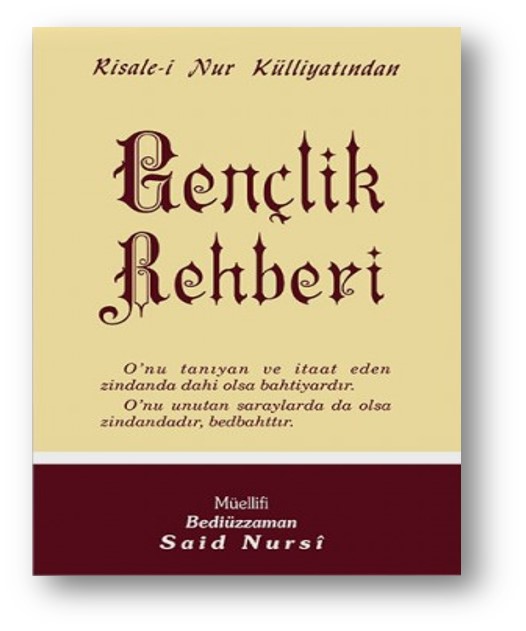
At the time I returned to blessed Isparta, which bears the meaning of the Medresetü’z-Zehra, for the third time, I had seen the sincere and enthusiastic interest shown by women towards the Risale-i Nur in some other provinces, and had realized that in a way far exceeding my due they had confidence in my instruction in it. I heard then that the women in Isparta, my blessed sisters of the hereafter, were waiting to receive instruction from me, as though I were going to instruct them in mosques in the manner of preaching. I was ill with five or so different illnesses, in a wretched state, lacking the strength to speak and think, yet that night the following was imparted to my heart, impellingly: “Fifteen years ago you wrote A Guide for Youth at the request of some youths and it was a source of benefit for many. Women, however, are in even greater need of a guide at this time.” Despite my extreme weakness, wretchedness, and powerlessness, in the face of this warning I wrote very concisely in three points a number of necessary matters which I now explain to my blessed sisters and young spiritual offspring.

FIRST POINT

Since one of the fundamental principles of the Risale-i Nur is compassion and women are champions of compassion, they are by nature more closely connected with the Risale-i Nur than others. Praise be to God, this natural sympathy is felt in many places. The self-sacrifice within such compassion seeks nothing in return and expresses true sincerity, and so is of the greatest importance at this time.

Yes, the fact that wanting nothing in return, a mother will sacrifice her life to save her young from danger, as demanded by her nature and with true sincerity, shows that women are capable of great heroism. By developing this heroism, they may save their lives both in this world and in the hereafter. However, this important attribute does not unfold under the influence of certain bad currents of thought, or else it is exploited. A small example out of hundreds is as follows:

http://www.erisale.com/index.jsp?locale=en#content.en.203.259

A compassionate mother undertakes every sort of self-sacrifice so that her child should not fall into danger in this worldly life and should receive every sort of benefit and advantage; she brings him up with this in view. Thinking, “My son is going to be a Pasha,” she gives him all her property, takes him from the Qur’an school and sends him to Europe. But it does not occur to her that her child’s eternal life has fallen into danger. She tries to save him from prison in this world and does not take into consideration his being sentenced to the prison of Hell. Reversing that innate compassion, she makes her innocent child a claimant against her in the hereafter, though he should be her intercessor. He will rebuke her saying: “Why did you not strengthen my belief and so cause me to be lost?” In this world too, since he did not receive a proper Islamic upbringing, he cannot respond to his mother’s wondrous compassion in the way it deserves; in fact he does so very deficiently.

If she does not misdirect her true compassion and works to save her unhappy child from everlasting incarceration in Hell and from dying while in misguidance, which will result in eternal extinction, the equivalent of each of the child’s good works will pass to the mother’s book of good deeds. And after her death he will continuously send lights to her spirit with his good works, and in the hereafter, will be not a claimant but with all his spirit and life an intercessor for her, and a blessed child of her’s for all eternity.

Yes, man’s first master and most influential teacher is his mother. In connection with this, I shall explain the following to you, which I have always felt strongly in my own self:

I am eighty years old and have received lessons from eighty thousand people. Yet I swear that the truest and most unshakeable lessons I have received are those inculcated in me by my late mother, which have always remained fresh for me. They have been planted in my nature as though they were seeds planted in my physical being. I observe that other instruction has been constructed on those seeds. That is to say, the lessons instilled in my nature and spirit by my mother when I was one year old I now see at the age of eighty to be fundamental seeds amid great truths.

For instance, I consider it certain that I learnt from the compassionate behaviour and acts of my mother and from her teaching, to be compassionate, which is the most important of the four principles of my way, and to be kind and clement, which is the greatest truth of the Risale-i Nur. Yes, the compassion of motherhood comprises true sincerity and true self-sacrifice, but it is a misuse of it to not think of the hereafter – a treasury of diamonds for her innocent child – and to turn his face towards this world, which

http://www.erisale.com/index.jsp?locale=en#content.en.203.260

resembles temporary, transient fragments of glass, and to be kind to him in that way, is to misuse that compassion.

A proof of this heroism of women in respect of compassion, which wants absolutely no recompense and nothing in return, and of their sacrificing their very spirits, which in no way seeks personal benefit and no show, is that a hen, which bears a tiny sample of that compassion, will attack a lion and sacrifice its life for its chicks.

Now, sincerity is the most valuable and most essential principle in Islamic training and in deeds pertaining to the hereafter. True sincerity is present in the heroism of this kind of compassion. If these two points begin to develop among women, it will lead to considerable happiness within the domain of Islam. When it comes to the heroism of men, it can never be for nothing; they always want recompense in perhaps a hundred ways. At the very least they want glory and renown. But regretably, unfortunate women practise hypocrisy in another form in order to be saved from the evil and oppression of tyrannical men; this sort arises from weakness and impotence.

SECOND POINT

This year, although I had withdrawn from the life of society and was in seclusion, I looked at the world for the sake of some of my brothers and sisters who were Risale-i Nur students. I heard from most of the friends who visited me complaints about their family lives. “Alas!”, I said, “Family life is the refuge of people, and particularly of Muslims, and a sort of Paradise, and a small world. Has this now started to break up as well?” I sought the reason and I understood that one or two covert groups were working to mislead the youth and drive the young to vice by exciting their appetites, so as to cause harm to Islamic social life and thereby to the religion of Islam. I also realized that one or two groups were working covertly and effectively to drive neglectful women down the wrong road. I understood too that a severe blow would be dealt to this Muslim nation from that quarter. I therefore categorically state the following to you my sisters and spiritual children:

The sole means of saving women’s happiness in the hereafter, and their happiness in this world, as well as saving their elevated innate qualities from corruption, is the training given by the religion of Islam; there is no other means. You hear about the situation into which the unfortunate women of Russia have fallen. It says in one part of the Risale-i Nur that no sensible man builds love and affection for his wife on her fleeting, superficial beauty of five to ten years; he should build it on her fine conduct, the

http://www.erisale.com/index.jsp?locale=en#content.en.203.261

most permanent and best of beauty, which is particular to womanhood and its compassion. Then, when the unfortunate advances in years, her husband’s love for her will persist. For his wife is not merely a temporary helper and companion in this worldly life, but an eternal, lovable companion in everlasting life, so the older they grow their love for each other should also grow, and their compassion and respect. Under the guise of culture and civilization, family life is now is a temporary animal relationship followed by eternal separation, and is being destroyed at its very foundations.

In another place in the Risale-i Nur it says: “Happy the man who in order not to lose his companion of eternity, copies his righteous wife and so becomes righteous himself. And happy the woman who, seeing her husband to be pious, adheres to religion herself so as not to lose her everlasting friend and companion. Unhappy the man who follows his wife in sin, does not try to make her give it up, but joins her. And unhappy the woman who, seeing her husband’s sinfulness, follows him in another way. And alas for the wife and husband who assist one another in throwing each other into the Fire. That is, who encourage one another to embrace the evils of civilization.”

These lines have the following meaning: at this time, Islamic conduct within the bounds of the Shari‘a is the only means of developing family life and finding happiness in this world and the hereafter, and causing the elevated qualities of women to unfold. Now, the most important matter in family life is this, that if the woman sees bad conduct and disloyalty in her husband and to spite him, stints in her loyalty and faithfulness to him, which is her duty as far as the family is concerned, then the factory of that family life will be thrown into confusion, exactly like discipline in the army being spoilt. The woman should try to reform her husband’s faults as far as she can in order to save her companion of eternity. It is harmful in every respect if she starts to show herself to others by unveiling herself and tries to make herself attractive to others. For a woman who gives up complete loyalty pays the penalty in this world too. Because it is her nature to be fearful and upset at the looks of those canonically strangers to her, and to avoid them. She is discomforted at the looks of eighteen out of twenty strangers. As for men, they are discomforted and upset at the looks of only one out of a hundred women who are canonically strangers to them. The woman suffers torment in that respect, and so too may be accused of disloyalty, and due to her weakness, will be unable to defend her rights.

In Short: Just as in respect of compassion women do not resemble men in heroism and sincerity, and men cannot compare with them in that

http://www.erisale.com/index.jsp?locale=en#content.en.203.262

regard; so too innocent women can in no way compare with men in vice. For this reason by their natures and weakness, they are truly frightened of strangers and feel themselves compelled to conceal themselves beneath their abundant outer garments. For if for eight minutes’ pleasure a man commits sin, he only suffers a loss of eight liras. But as the penalty of the pleasure of eight minutes’ sin, in this world the woman bears a heavy load for eight months and then has the hardship of rearing the unprotected child for eight years. She therefore cannot compete with men in vice and pays a penalty a hundred times greater.

The not infrequent incidents of this sort show that just as by nature women are the source of elevated morals, so do they virtually lack the capacity for worldly pleasure in vice and dissipation. That is to say, they are a type of blessed creature created to pass happy lives in the family within the bounds laid down by Islam. God damn those covert groups who are corrupting these blessed creatures! And may Almighty God preserve my sisters from the evil of such dissolute wretches.

My sisters! I have this to say to you confidentially: rather than entering under the domination of a dissolute, immoral, Westernized husband due to straitened circumstances, try to economize and obtain your own livelihood like innocent peasant women with the frugality and contentment which is in your natures; do not try to sell yourselves. If it is your fate to have a husband who is unsuitable for you, be content with your fate and resigned to it. God willing, he will be reformed through your contentment and resignation. But to apply to the courts for a divorce, which I have heard of recently; that is not in keeping with the honour of Islam and this nation’s good name!

THIRD POINT

My dear sisters, you should be certain that as is demonstrated with powerful proofs and examples in the Risale-i Nur, present in pleasures and enjoyment outside the bounds of the licit are pains and distress ten times greater. You may find detailed expositions of this in the Risale-i Nur. For instance, the Sixth, Seventh and Eighth Words from The Short Words and A Guide For Youth will elucidate this truth for you completely in place of me. In which case, make do with licit pleasures and be content with them. Innocent conversation with your innocent children in your home is more pleasurable than a hundred cinemas.

You should also know certainly that true pleasure in the life of this world lies in belief and the sphere of faith. There is an immaterial pleasure to be found in all good works. The Risale-i Nur has proved with hundreds

http://www.erisale.com/index.jsp?locale=en#content.en.203.263

of decisive evidences that even in this world most bitter and grievous suffering is present in vice and misguidance. I myself have experienced on numerous occasions as certainly as seeing it with my own eyes, that a seed of Paradise is contained in belief, while a seed of Hell is found in vice and misguidance. This truth is repeated many times in the Risale-i Nur. Although the Risale-i Nur has come into the hands of those who oppose it most obstinately and severely, they have been unable to refute this truth; neither have the committees of experts and the courts been able to refute it. Now, my blessed and innocent sisters and your children who are like my spiritual children, foremost the Treatise on Islamic Dress, and A Guide For Youth, and The Short Words should teach you in my place.

I have heard that you want me to teach you in the mosque, but my wretched state and my illness and many other circumstances do not permit it. I have decided to include all my sisters who read and accept this instruction which I have written for you in all my prayers and spiritual gains, like all the students of the Risale-i Nur. If you obtain and read part of the Risale-i Nur in my place, or listen to it, then in accordance with my rule you too will have a share in the prayers and spiritual gains of all the Risale-i Nur students, your brothers.

I was going to write more, but I am very ill and very weak and very old and have many duties like correcting copies of the Risale-i Nur, so for now I have sufficed with this much.

                                                     The Eternal One, He is the Eternal One!

                                                 Your brother who is in need of your prayers,

                                                                     S a i d   N u r s i

http://www.erisale.com/index.jsp?locale=en#content.en.203.264

Tesettür Risalesi

On Islamic Dress for Women The Twenty Fourth Flash

Yirmi Dördüncü Lem’a

 Tesettür hakkındadır

On Beşinci Notanın İkinci ve Üçüncü Meseleleri iken, ehemmiyetine binaen Yirmi Dördüncü Lem’a olmuştur.

يَۤا اَيُّهَا النَّبِيُّ قُلْ ِلاَزْوَاجِكَ وَبَنَاتِكَ وَنِسَۤاءِ الْمُؤْمِنِينَ يُدْنِينَ عَلَيْهِنَّ مِنْ جَلاَبِيبِهِنَّ     1

Dipnot-1 “Ey Peygamber! Hanımlarına, kızlarına ve mü’minlerin hanımlarına söyle, (evlerinden çıktıklarında) dış örtülerini üzerlerine alsınlar.” Ahzâb Sûresi, 33:59.

(ilâ âhir) âyeti, tesettürü emrediyor. Medeniyet-i sefihe ise, Kur’ân’ın bu hükmüne karşı muhalif gidiyor. Tesettürü fıtrî görmüyor, bir esarettir diyor. HAŞİYE-1

Haşiye-1Mahkemeye karşı ve mahkemeyi susturan Lâyiha-i Temyizin müdafaatından bir parça: “Ben de Adliyenin mahkemesine derim ki: Bin üç yüz elli senede ve her asırda üç yüz elli milyon insanların hayat-ı içtimaiyesinde en kudsî ve hakikî ve hakikatlı bir düstûr-u İlâhîyi, üç yüz elli bin tefsirin tasdiklerine ve ittifaklarına istinaden ve bin üçyüz elli sene zarfından geçmiş ecdadımızın itikadlarına iktidâen tefsir eden bir adamı mahkûm eden haksız bir kararı, elbette rûy-i zeminde adalet varsa, o kararı red ve bu hükmü nakzedecektir.”

BİRİNCİ HİKMET

Tesettür, kadınlar için fıtrîdir ve fıtratları iktiza ediyor. Çünkü kadınlar hilkaten zayıf ve nazik olduklarından, kendilerini ve hayatından ziyade sevdiği

http://www.erisale.com/#content.tr.3.317

yavrularını himaye edecek bir erkeğin himaye ve yardımına muhtaç bulunduğundan, kendini sevdirmek ve nefret ettirmemek ve istiskale mâruz kalmamak için fıtrî bir meyli var.

Hem kadınların on adetten altı yedisi, ya ihtiyardır, ya çirkindir ki, ihtiyarlığını ve çirkinliğini herkese göstermek istemezler. Ya kıskançtır, kendinden daha güzellere nisbeten çirkin düşmemek veya tecavüzden ve ittihamdan korkar; taarruza mâruz kalmamak ve kocası nazarında hıyanetle müttehem olmamak için, fıtraten tesettür isterler. Hattâ dikkat edilse, en ziyade kendini saklayan, ihtiyarlardır. Ve on adetten ancak iki üç tanesi bulunabilir ki, hem genç olsun, hem güzel olsun, hem kendini göstermekten sıkılmasın.

Malûmdur ki, insan sevmediği ve istiskal ettiği adamların nazarından sıkılır, müteessir olur. Elbette açık saçıklık kıyafetine giren güzel bir kadın, bakmasına hoşlandığı nâmahrem erkeklerden onda iki üçü varsa, yedi sekizinden istiskal eder. Hem tefahhuş ve tefessüh etmeyen bir güzel kadın, nazik ve serîütteessür olduğundan, maddeten tesiri tecrübe edilen, belki semlendiren pis nazarlardan elbette sıkılır. Hattâ işitiyoruz, açık saçıklık yeri olan Avrupa’da çok kadınlar, bu dikkat-i nazardan sıkılarak, “Bu alçaklar bizi göz hapsine alıp sıkıyorlar” diye polislere şekvâ ediyorlar. Demek, medeniyetin ref-i tesettürü hilâf-ı fıtrattır. Kur’ân’ın tesettür emri fıtrî olmakla beraber, o maden-i şefkat ve kıymettar birer refika-i ebediye olabilen kadınları, tesettür ile sukuttan, zilletten ve mânevî esaretten ve sefaletten kurtarıyor.

Hem kadınlarda ecnebî erkeklere karşı, fıtraten korkaklık, tahavvüf var. Tahavvüf ise, fıtraten, tesettürü iktiza ediyor. Çünkü, sekiz dokuz dakika bir zevki cidden acılaştıracak sekiz dokuz ay ağır bir veled yükünü zahmetle çekmekle beraber, hâmisiz bir veledin terbiyesiyle, sekiz dokuz sene, o sekiz dokuz dakika gayr-ı meşru zevkin belâsını çekmek ihtimali var. Ve kesretle vâki olduğundan, cidden şiddetle nâmahremlerden fıtratı korkar ve cibilliyeti sakınmak ister. Ve tesettürle, nâmahremin iştihasını açmamak ve tecavüzüne meydan vermemek, zayıf hilkati emreder ve kuvvetli ihtar eder. Ve bir siperi ve kalesi, çarşafı

http://www.erisale.com/#content.tr.3.318

olduğunu gösteriyor. Mesmûâtıma göre, merkez ve payitaht-ı hükûmette, çarşı içinde, gündüzde, ahalinin gözleri önünde, gayet âdi bir kundura boyacısı, dünyaca rütbeten büyük bir adamın açık bacaklı karısına bilfiil sarkıntılık etmesi, tesettür aleyhinde olanların hayâsız yüzlerine bir şamar vuruyor!

İKİNCİ HİKMET

Kadın ve erkek ortasında gayet esaslı ve şiddetli münasebet, muhabbet ve alâka, yalnız dünyevî hayatın ihtiyacından ileri gelmiyor. Evet, bir kadın, kocasına yalnız hayat-ı dünyeviyeye mahsus bir refika-i hayat değildir. Belki hayat-ı ebediyede dahi bir refika-i hayattır.

Madem hayat-ı ebediyede dahi kocasına refika-i hayattır; elbette, ebedî arkadaşı ve dostu olan kocasının nazarından gayrı, başkasının nazarını kendi mehâsinine celb etmemek ve onu darıltmamak ve kıskandırmamak lâzım gelir. Madem mü’min olan kocası, sırr-ı imana binaen, onunla alâkası hayat-ı dünyeviyeye münhasır ve yalnız hayvânî ve güzellik vaktine mahsus, muvakkat bir muhabbet değil, belki hayat-ı ebediyede dahi bir refika-i hayat noktasında esaslı ve ciddî bir muhabbetle, bir hürmetle alâkadardır. Hem yalnız gençliğinde ve güzellik zamanında değil, belki ihtiyarlık ve çirkinlik vaktinde dahi o ciddî hürmet ve muhabbeti taşıyor. Elbette ona mukabil, o da kendi mehâsinini onun nazarına tahsis ve muhabbetini ona hasretmesi, mukteza-yı insaniyettir. Yoksa pek az kazanır, fakat pek çok kaybeder.

Şer’an koca, karıya küfüv olmalı, yani, birbirine münasip olmalı. Bu küfüv ve denk olmak, en mühimi, diyanet noktasındadır.

Ne mutlu o kocaya ki, kadınının diyanetine bakıp taklit eder; refikasını hayat-ı ebediyede kaybetmemek için mütedeyyin olur.

Bahtiyardır o kadın ki, kocasının diyanetine bakıp “Ebedî arkadaşımı kaybetmeyeyim” diye takvâya girer.

Veyl o erkeğe ki, saliha kadınını ebedî kaybettirecek olan sefahete girer.

http://www.erisale.com/#content.tr.3.319

Ne bedbahttır o kadın ki, müttakî kocasını taklit etmez, o mübarek ebedî arkadaşını kaybeder.

Binler veyl o iki bedbaht zevc ve zevceye ki, birbirinin fıskını ve sefahetini taklit ediyorlar, birbirine ateşe atılmasında yardım ediyorlar.

ÜÇÜNCÜ HİKMET

Bir ailenin saadet-i hayatiyesi, koca ve karı mâbeyninde bir emniyet-i mütekabile ve samimî bir hürmet ve muhabbetle devam eder. Tesettürsüzlük ve açık saçıklık, o emniyeti bozar, o mütekabil hürmet ve muhabbeti de kırar. Çünkü, açık saçıklık kılığına giren on kadından ancak bir tanesi bulunur ki, kocasından daha güzeli görmediğinden, kendini ecnebîye sevdirmeye çalışmaz. Dokuzu, kocasından daha iyisini görür. Ve yirmi adamdan ancak bir tanesi, karısından daha güzelini görmüyor. O vakit o samimî muhabbet ve hürmet-i mütekabile gitmekle beraber, gayet çirkin ve gayet alçakça bir his uyandırmaya sebebiyet verebilir. Şöyle ki:

İnsan, hemşire misilli mahremlerine karşı fıtraten şehvânî his taşıyamıyor. Çünkü mahremlerin simaları, karâbet ve mahremiyet cihetindeki şefkat ve muhabbet-i meşruayı ihsas ettiği cihetle, nefsî, şehvânî temâyülâtı kırar. Fakat bacaklar gibi şer’an mahremlere de göstermesi caiz olmayan yerlerini açık saçık bırakmak, süflî nefislere göre, gayet çirkin bir hissin uyanmasına sebebiyet verebilir. Çünkü mahremin siması mahremiyetten haber verir ve nâmahreme benzemez. Fakat meselâ açık bacak, mahremin gayrıyla müsavidir. Mahremiyeti haber verecek bir alâmet-i farikası olmadığından, hayvânî bir nazar-ı hevesi, bir kısım süflî mahremlerde uyandırmak mümkündür. Böyle nazar ise, tüyleri ürpertecek bir sukut-u insaniyettir!

DÖRDÜNCÜ HİKMET

Malûmdur ki, kesret-i nesil, herkesçe matluptur. Hiçbir millet ve hükûmet

http://www.erisale.com/#content.tr.3.320

yoktur ki, kesret-i tenasüle taraftar olmasın. Hattâ Resul-i Ekrem Aleyhissalâtü Vesselâm ferman etmiş:

تَنَاكَحُوا تَكَاثَرُوا فَاِنِّى اُبَاهِى بِكُمُ اْلاُمَمَ     1

Dipnot-1el-Münâvî, Feyzü’l-Kadîr, 3:269, no: 3366; el-Aclûnî, Keşfü’l-Hafâ, 1021.

(ev kemâ kàl.) Yani, “İzdivaç ediniz, çoğalınız. Ben kıyamette sizin kesretinizle iftihar edeceğim.”

Halbuki tesettürün ref’i, izdivacı teksir etmeyip çok azaltıyor. Çünkü, en serseri ve asrî bir genç dahi refika-i hayatını namuslu ister. Kendi gibi asrî, yani açık saçık olmasını istemediğinden bekâr kalır, belki de fuhşa sülûk eder.

Kadın öyle değil; o derece kocasını inhisar altına alamaz. Çünkü kadının—aile hayatında müdir-i dahilî olmak haysiyetiyle kocasının bütün malına, evlâdına ve herşeyine muhafaza memuru olduğundan—en esaslı hasleti sadakattir, emniyettir. Açık saçıklık ise, bu sadakati kırar, kocası nazarında emniyeti kaybeder, ona vicdan azabı çektirir. Hattâ erkeklerde iki güzel haslet olan cesaret ve sehâvet kadınlarda bulunsa, bu emniyete ve sadakate zarar olduğu için, ahlâk-ı seyyiedendir, kötü haslet sayılırlar. Fakat kocasının vazifesi, ona hazinedarlık ve sadakat değil, belki himâyet ve merhamet ve hürmettir.Onun için, o erkek inhisar altına alınmaz, başka kadınları da nikâh edebilir.

Memleketimiz Avrupa’ya kıyas edilmez. Çünkü orada, düello gibi çok şiddetli vasıtalarla, açık saçıklık içinde namus bir derece muhafaza edilir. İzzet-i nefis sahibi birisinin karısına pis nazarla bakan, boynuna kefenini takar, sonra bakar. Hem memâlik-i bâride olan Avrupa’daki tabiatlar, o memleket gibi bârid ve câmiddirler. Bu Asya, yani âlem-i İslâm kıt’ası, ona nisbeten memâlik-i harredir. Malûmdur ki, muhitin, insanın ahlâkı üzerinde tesiri vardır. O bârid memlekette, soğuk insanlarda hevesât-ı hayvâniyeyi tahrik etmek ve iştahı açmak için

http://www.erisale.com/#content.tr.3.321

açık saçıklık belki çok sû-i istimâlâta ve isrâfâta medar olmaz. Fakat seriütteessür ve hassas olan memâlik-i harredeki insanların hevesât-ı nefsâniyesini mütemadiyen tehyiç edecek açık saçıklık, elbette çok sû-i istimâlâta ve isrâfâta ve neslin zaafiyetine ve sukut-u kuvvete sebeptir. Bir ayda veya yirmi günde ihtiyac-ı fıtrîye mukabil, her birkaç günde kendini bir israfa mecbur zanneder. O vakit, her ayda on beş gün kadar hayız gibi arızalar münasebetiyle kadından tecennüp etmeye mecbur olduğundan, nefsine mağlûp ise fuhşiyata da meyleder.

Şehirliler, köylülere, bedevîlere bakıp tesettürü kaldıramaz. Çünkü köylerde, bedevîlerde, derd-i maişet meşgalesiyle ve bedenen çalışmak ve yorulmak münasebetiyle, hem şehirlilere nisbeten nazar-ı dikkati az celb eden, mâsûme işçi ve bir derece kaba kadınların kısmen açık olmaları, hevesât-ı nefsâniyeyi tehyice medar olamadığı gibi, serseri ve işsiz adamlar az bulunduğundan, şehirdeki mefâsidin onda biri onlarda bulunmaz. Öyleyse onlara kıyas edilmez.

http://www.erisale.com/#content.tr.3.322

بِاسْمِهِ سُبْحَانَهُ        1

Dipnot-1Her türlü noksan sıfatlardan yüce olan Allah’ın adıyla.

 Ehl-i iman âhiret hemşirelerim olan kadınlar taifesi ile bir muhaveredir

Bazı vilâyetlerde taife-i nisâdan samimî ve hararetli bir surette Nurlara karşı alâkalarını gördüğüm ve haddimden pek ziyade, onların Nurlara ait derslerime itimadlarını bildiğim sıralarda, mübarek Isparta’ya ve mânevî Medresetü’z-Zehraya üçüncü defa geldiğim zaman işittim ki, o mübarek âhiret hemşirelerim olan taife-i nisâ, benden bir ders bekliyorlarmış. Güya vaaz suretinde camilerde onlara bir dersim olacak. Halbuki, ben dört beş vecihle hastayım. Ve hem perişan, hattâ konuşmaya ve düşünmeye iktidarsız bulunduğum halde, bu gece şiddetli bir ihtarla kalbime geldi ki:

“Madem on beş sene evvel gençlerin istemeleriyle Gençlik Rehberi’ni onlar için yazdın ve pek çok istifade edildi. Halbuki hanımlar taifesi, gençlerden daha ziyade bu zamanda öyle bir rehbere muhtaçtırlar.”

Ben de bu ihtara karşı gayet perişan ve zaaf ve aczimle beraber, Üç Nükte ile, gayet muhtasar bazı lüzumlu maddeleri, o mübarek hemşirelerime ve mânevî genç evlâtlarıma beyan ediyorum.

BİRİNCİ NÜKTE

Risale-i Nur’un en mühim bir esası şefkat olmasından, nisâ taifesi şefkat kahramanları bulunmaları cihetiyle daha ziyade Risale-i Nur’la fıtraten alâkadardırlar. Ve lillâhilhamd bu fıtrî alâkadarlık çok yerlerde hissediliyor. Bu şefkatteki fedakârlık, hakikî bir ihlâsı ve mukabelesiz bir fedakârlık mânâsını ifade ettiğinden, şimdi bu zamanda pek çok ehemmiyeti var.

Evet, bir valide veledini tehlikeden kurtarmak için hiçbir ücret istemeden

http://www.erisale.com/#content.tr.3.323

ruhunu feda etmesi ve hakikî bir ihlâs ile vazife-i fıtriyesi itibarıyla kendini evlâdına kurban etmesi gösteriyor ki, hanımlarda gayet yüksek bir kahramanlık var. Bu kahramanlığın inkişafı ile hem hayat-ı dünyeviyesini, hem hayat-ı ebediyesini onunla kurtarabilir. Fakat bazı fena cereyanlarla, o kuvvetli ve kıymettar seciye inkişaf etmez. Veyahut sû-i istimal edilir. Yüzer nümunelerinden bir küçük nümunesi şudur:

O şefkatli valide, çocuğunun hayat-ı dünyeviyede tehlikeye girmemesi, istifade ve fayda görmesi için her fedakârlığı nazara alır, onu öyle terbiye eder. “Oğlum paşa olsun” diye bütün malını verir, hafız mektebinden alır, Avrupa’ya gönderir. Fakat o çocuğun hayat-ı ebediyesi tehlikeye girdiğini düşünmüyor. Ve dünya hapsinden kurtarmaya çalışıyor; Cehennem hapsine düşmemesini nazara almıyor. Fıtrî şefkatin tam zıddı olarak, o mâsum çocuğunu, âhirette şefaatçi olmak lâzım gelirken dâvâcı ediyor. O çocuk, “Niçin benim imanımı takviye etmeden bu helâketime sebebiyet verdin?” diye şekvâ edecek. Dünyada da, terbiye-i İslâmiyeyi tam almadığı için, validesinin harika şefkatinin hakkına karşı lâyıkıyla mukabele edemez, belki de çok kusur eder.

Eğer hakikî şefkat sû-i istimal edilmeyerek, biçare veledini haps-i ebedî olan Cehennemden ve idam-ı ebedî olan dalâlet içinde ölmekten kurtarmaya o şefkat sırrıyla çalışsa, o veledin bütün ettiği hasenâtının bir misli, validesinin defter-i a’mâline geçeceğinden, validesinin vefatından sonra her vakit hasenatlarıyla ruhuna nurlar yetiştirdiği gibi, âhirette de, değil dâvâcı olmak, bütün ruh u canıyla şefaatçi olup ebedî hayatta ona mübarek bir evlât olur.

Evet, insanın en birinci üstadı ve tesirli muallimi, onun validesidir. Bu münasebetle, ben kendi şahsımda kat’î ve daima hissettiğim bu mânâyı beyan ediyorum:

Ben bu seksen sene ömrümde, seksen bin zatlardan ders aldığım halde, kasem ediyorum ki, en esaslı ve sarsılmaz ve her vakit bana dersini tazeler gibi, merhum  

http://www.erisale.com/#content.tr.3.324

validemden aldığım telkinat ve mânevî derslerdir ki, o dersler fıtratımda, adeta maddî vücudumda çekirdekler hükmünde yerleşmiş. Sair derslerimin o çekirdekler üzerine bina edildiğini aynen görüyorum. Demek, bir yaşımdaki fıtratıma ve ruhuma merhum validemin ders ve telkinâtını, şimdi bu seksen yaşımdaki gördüğüm büyük hakikatler içinde birer çekirdek-i esasiye müşahede ediyorum.

Ezcümle: Meslek ve meşrebimin dört esasından en mühimi olan şefkat etmek ve Risale-i Nur’un da en büyük hakikati olan acımak ve merhamet etmeyi, o validemin şefkatli fiil ve halinden ve o mânevî derslerinden aldığımı yakînen görüyorum.

Evet, bu hakikî ihlâs ile hakikî bir fedakârlık taşıyan validelik şefkati sû-i istimal edilip, mâsum çocuğunun elmas hazinesi hükmünde olan âhiretini düşünmeyerek, muvakkat fâni şişeler hükmünde olan dünyaya o çocuğun mâsum yüzünü çevirmek ve bu şekilde ona şefkat göstermek, o şefkati sû-i istimal etmektir.

Evet, kadınların şefkat cihetiyle bu kahramanlıklarını hiçbir ücret ve hiçbir mukabele istemeyerek, hiçbir faide-i şahsiye, hiçbir gösteriş mânâsı olmayarak ruhunu feda ettiklerine, o şefkatin küçücük bir nümunesini taşıyan bir tavuğun yavrusunu kurtarmak için arslana saldırması ve ruhunu feda etmesi ispat ediyor.

Şimdi terbiye-i İslâmiyeden ve a’mâl-i uhreviyeden en kıymetli ve en lüzumlu esas, ihlâstır. Bu çeşit şefkatteki kahramanlıkta o hakikî ihlâs bulunuyor. Eğer bu iki nokta o mübarek taifede inkişafa başlasa, daire-i İslâmiyede pek büyük bir saadete medar olur. Halbuki erkeklerin kahramanlıkları mukabelesiz olamıyor; belki yüz cihette mukabele istiyorlar. Hiç olmazsa şan ve şeref istiyorlar. Fakat maattessüf biçare mübarek taife-i nisâiye, zalim erkeklerinin şerlerinden ve tahakkümlerinden kurtulmak için, başka bir tarzda, zaafiyetten ve aczden gelen başka bir nevide riyâkârlığa giriyorlar.

İKİNCİ NÜKTE

Bu sene inzivâda iken ve hayat-ı içtimaiyeden çekildiğim halde, bazı Nurcu kardeşlerimin ve hemşirelerimin hatırları için dünyaya baktım. Benimle görüşen

http://www.erisale.com/#content.tr.3.325

ekserî dostlardan, kendi ailevî hayatlarından şekvâlar işittim. “Eyvah!” dedim. “İnsanın, hususan Müslümanın tahassungâhı ve bir nevi cenneti ve küçük bir dünyası aile hayatıdır. Bu da mı bozulmaya başlamış?” dedim. Sebebini aradım. Bildim ki, nasıl İslâmiyetin hayat-ı içtimaiyesine ve dolayısıyla din-i İslâma zarar vermek için, gençleri yoldan çıkarmak ve gençlik hevesâtıyla sefahete sevk etmek için bir iki komite çalışıyormuş. Aynen öyle de, biçare nisâ taifesinin gafil kısmını dahi yanlış yollara sevk etmek için bir iki komitenin tesirli bir surette perde altında çalıştığını hissettim. Ve bildim ki, bu millet-i İslâma bir dehşetli darbe, o cihetten geliyor. Ben de siz hemşirelerime ve gençleriniz olan mânevî evlâtlarıma kat’iyen beyan ediyorum ki:

Kadınların saadet-i uhreviyesi gibi saadet-i dünyeviyeleri de ve fıtratlarındaki ulvî seciyeleri de, bozulmaktan kurtulmanın çare-i yegânesi, daire-i İslâmiyedeki terbiye-i diniyeden başka yoktur. Rusya’da o biçare taifenin ne hale girdiğini işitiyorsunuz. Risale-i Nur’un bir parçasında denilmiş ki:

Aklı başında olan bir adam, refikasına muhabbetini ve sevgisini, beş on senelik fâni ve zâhirî hüsn-ü cemâline bina etmez. Belki, kadınların hüsn-ü cemâlinin en güzeli ve daimîsi, onun şefkatine ve kadınlığa mahsus hüsn-ü sîretine sevgisini bina etmeli—tâ ki, o biçare ihtiyarladıkça, kocasının muhabbeti ona devam etsin. Çünkü onun refikası, yalnız dünya hayatındaki muvakkat bir yardımcı refika değil, belki hayat-ı ebediyesinde ebedî ve sevimli bir refika-i hayat olduğundan, ihtiyarlandıkça daha ziyade hürmet ve merhametle birbirine muhabbet etmek lâzım geliyor. Şimdiki terbiye-i medeniye perdesi altındaki hayvancasına muvakkat bir refakatten sonra ebedî bir mufarakate mâruz kalan o aile hayatı, esasıyla bozuluyor.

Hem Risale-i Nur’un bir cüz’ünde denilmiş ki: Bahtiyardır o adam ki, refika-i ebediyesini kaybetmemek için saliha zevcesini taklit eder, o da salih olur. Hem

http://www.erisale.com/#content.tr.3.326

bahtiyardır o kadın ki, kocasını mütedeyyin görür, ebedî dostunu ve arkadaşını kaybetmemek için o da tam mütedeyyin olur, saadet-i dünyeviyesi içinde saadet-i uhreviyesini kazanır. Bedbahttır o adam ki, sefahete girmiş zevcesine ittibâ eder, vazgeçirmeye çalışmaz, kendisi de iştirak eder. Bedbahttır o kadın ki, zevcinin fıskına bakar, onu başka bir surette taklit eder. Veyl o zevc ve zevceye ki, birbirini ateşe atmakta yardım eder. Yani, medeniyet fantaziyelerine birbirini teşvik eder.

İşte, Risale-i Nur’un bu mealdeki cümlelerinin mânâsı budur ki: Bu zamanda aile hayatının ve dünyevî ve uhrevî saadetinin ve kadınlarda ulvî seciyelerin inkişafının sebebi, yalnız daire-i şeriattaki âdâb-ı İslâmiyetle olabilir. Şimdi aile hayatında en mühim nokta budur ki, kadın, kocasında fenalık ve sadakatsizlik görse, o da kocasının inadına, kadının vazife-i ailevîsi olan sadakat ve emniyeti bozsa, aynen askeriyedeki itaatin bozulması gibi, o aile hayatının fabrikası zîrüzeber olur. Belki o kadın, elinden geldiği kadar kocasının kusurunu ıslaha çalışmalıdır ki, ebedî arkadaşını kurtarsın. Yoksa, o da kendini açıklık ve saçıklıkla başkalara göstermeye ve sevdirmeye çalışsa, her cihetle zarar eder. Çünkü hakikî sadakati bırakan, dünyada da cezasını görür. Çünkü nâmahremlerin nazarından fıtratı korkar, sıkılır, çekilir. Nâmahrem yirmi erkeğin on sekizinin nazarından istiskal eder. Erkek ise, nâmahrem yüz kadından, ancak birisinden istiskal eder, bakmasından sıkılır. Kadın o cihette azap çektiği gibi, sadakatsizlik ittihamı altına girer, zaafiyetiyle beraber; hukukunu muhafaza edemez.

Elhasıl: Nasıl ki kadınlar kahramanlıkta, ihlâsta, şefkat itibarıyla erkeklere benzemedikleri gibi, erkekler de o kahramanlıkta onlara yetişemiyorlar. Öyle de, o mâsum hanımlar dahi, sefahette hiçbir vecihle erkeklere yetişemezler. Onun için, fıtratlarıyla ve zayıf hilkatleriyle nâmahremlerden şiddetli korkarlar ve çarşaf altında saklanmaya kendilerini mecbur bilirler. Çünkü, erkek sekiz dakika zevk ve lezzet için sefahete girse, ancak sekiz lira kadar birşey zarar eder. Fakat kadın sekiz dakika sefahetteki zevkin cezası olarak, dünyada dahi sekiz ay

http://www.erisale.com/#content.tr.3.327

ağır bir yükü karnında taşır ve sekiz sene de o hâmisiz çocuğun terbiyesinin meşakkatine girdiği için, sefahette erkeklere yetişemez, yüz derece fazla cezasını çeker.

Az olmayan bu nevi vukuat da gösteriyor ki, mübarek taife-i nisâiye, fıtraten yüksek ahlâka menşe olduğu gibi, fısk ve sefahette dünya zevki için kabiliyetleri yok hükmündedir. Demek onlar daire-i terbiye-i İslâmiye içinde mes’ut bir aile hayatını geçirmeye mahsus bir nevi mübarek mahlûkturlar. Bu mübarekleri ifsad eden komiteler kahrolsunlar! Allah, bu hemşirelerimi de bu serserilerin şerlerinden muhafaza eylesin. Âmin.

Hemşirelerim, mahremce bu sözümü size söylüyorum: Maişet derdi için, serseri, ahlâksız, frenkmeşrep bir kocanın tahakkümü altına girmektense, fıtratınızdaki iktisat ve kanaatle, köylü mâsum kadınların nafakalarını kendileri çıkarmak için çalışmaları nev’inden kendinizi idareye çalışınız, satmaya çalışmayınız. Şayet size münasip olmayan bir erkek kısmet olsa, siz kısmetinize razı olunuz ve kanaat ediniz. İnşaallah, rızanız ve kanaatinizle o da ıslah olur. Yoksa, şimdiki işittiğim gibi, mahkemelere boşanmak için müracaat edeceksiniz. Bu da, haysiyet-i İslâmiye ve şeref-i milliyemize yakışmaz.

ÜÇÜNCÜ NÜKTE

Aziz hemşirelerim, kat’iyen biliniz ki, daire-i meşruanın haricindeki zevklerde, lezzetlerde, on derece onlardan ziyade elemler ve zahmetler bulunduğunu, Risale-i Nur yüzer kuvvetli delillerle, hadisatlarla ispat etmiştir. Uzun tafsilâtını Risale-i Nur’da bulabilirsiniz.

Ezcümle, Küçük Sözler’den Altıncı, Yedinci, Sekizinci Sözler ve Gençlik Rehberi benim bedelime sizlere tam bu hakikati gösterecek. Onun için, daire-i meşruadaki keyfe iktifâ ediniz ve kanaat getiriniz. Sizin hanenizdeki mâsum evlâtlarınızla mâsûmâne sohbet, yüzer sinemadan daha ziyade zevklidir.

http://www.erisale.com/#content.tr.3.328

Hem kat’iyen biliniz ki, bu hayat-ı dünyeviyede hakikî lezzet iman dairesindedir ve imandadır. Ve a’mâl-i salihanın herbirisinde bir mânevî lezzet var. Ve dalâlet ve sefahette, bu dünyada dahi gayet acı ve çirkin elemler bulunduğunu Risale-i Nur yüzer kat’î delillerle ispat etmiştir. Adeta imanda bir Cennet çekirdeği ve dalâlette ve sefahette bir Cehennem çekirdeği bulunduğunu, ben kendim çok tecrübelerle ve hadiselerle aynelyakin görmüşüm ve Risale-i Nur’da bu hakikat tekrar ile yazılmış. En şedit muannit ve muterizlerin eline girip, hem resmî ehl-i vukuflar ve mahkemeler o hakikati cerh edememişler. Şimdi sizin gibi mübarek ve mâsum hemşirelerime ve evlâtlarım hükmünde küçüklerinize, başta Tesettür Risalesi ve Gençlik Rehberi ve Küçük Sözler benim bedelime sizlere ders versin.

Ben işittim ki, benim size camide ders vermekliğimi arzu ediyorsunuz. Fakat benim perişaniyetimle beraber hastalığım ve çok esbab, bu vaziyete müsaade etmiyor. Ben de sizin için yazdığım bu dersimi okuyan ve kabul eden bütün hemşirelerimi, bütün mânevî kazançlarıma ve dualarıma Nur şakirtleri gibi dahil etmeye karar verdim. Eğer siz benim bedelime Risale-i Nur’u kısmen elde edip okusanız veya dinleseniz, o vakit, kaidemiz mûcibince, bütün kardeşleriniz olan Nur şakirtlerinin mânevî kazançlarına ve dualarına da hissedar oluyorsunuz.

Ben şimdi daha ziyade yazacaktım. Fakat çok hasta ve çok zayıf ve çok ihtiyar ve tashihat gibi çok vazifelerim bulunduğundan, şimdilik bu kadarla iktifâ ettim.

اَلْبَاقِى هُوَ الْبَاقِى 1

Duanıza muhtaç kardeşiniz

Said Nursî


Dipnot-1Bâkî olan sadece Odur.

http://www.erisale.com/#content.tr.3.329