Why Does the Human Spirit Long for Eternity? | The Twenty-Ninth Word – Fifth Point

Why does the human spirit long for something beyond this temporary world?

Why do we desire happiness that never ends? Why do our hopes reach beyond the boundaries of life itself?

In this episode of the Twenty-Ninth Word, Bediuzzaman Said Nursi explores one of the deepest mysteries of human nature: our longing for eternal happiness.

The human spirit possesses unlimited potentialities. From these arise countless abilities, endless desires, infinite hopes, and limitless thoughts.

But could these extraordinary qualities be pointing towards an eternal destination?

Could our deep and unwavering desire for everlasting happiness be a sign that we were created for something beyond this temporary existence?

Nursi invites us to reflect on the nature of the human spirit and the meaning of its longing for eternity.

Perhaps our deepest desires are not without purpose.

Perhaps they are pointing towards our eternal home.

THE TWENTY-NINTH WORD
Second Aim – Second Fundamental Point – Fifth Point

Based on the Risale-i Nur Collection by Bediuzzaman Said Nursi.

SOURCE & FURTHER READING:

The Words – The Twenty-Ninth Word
Translated by Şükran Vahide
Published by Sözler Neşriyat

https://www.erisale.com/en/words/the-twenty-ninth-word-second-aim#4251

Risale-i Nur Reading Program 2.1.0 – Words [2021], p. 554

A QUESTION FOR YOU:

Do you believe that humanity’s deep desire for eternal happiness is a sign of an eternal destiny?

Share your thoughts in the comments.

If this reflection inspired you, please like, subscribe, and share this video.

#EternalHappiness #HumanSpirit #TwentyNinthWord

THE TWENTY-NINTH WORD

SECOND AIM

SECOND FUNDAMENTAL POINT

FIFTH POINT

Have you ever wondered why the human heart longs for something beyond this world?

Why do we dream of a happiness that never fades?

Why do we desire an eternity that life itself cannot offer?

Those who have deeply studied the mysteries of creation have discovered something remarkable.

Within the human spirit lies an extraordinary potential.

A potential without limits.

And within that potential are countless abilities.

From these abilities emerge endless desires.

From these desires arise infinite hopes.

And from these hopes are born limitless thoughts and ideas.

But what does all this mean?

Could these extraordinary qualities be pointing towards something beyond our visible world?

Consider this.

Every one of these desires seems to reach beyond the boundaries of this temporary life.

Every hope appears to look towards a greater reality.

As though the human spirit were stretching out its hands towards eternal happiness.

As though its eyes were constantly searching for a world beyond this one.

A world where happiness does not disappear.

Where beauty does not fade.

And where life is not overshadowed by death.

There is something even more remarkable.

Human nature itself cannot lie.

The longing for eternal happiness is not a passing wish.

It is deep.

It is powerful.

And it is unwavering.

This desire is woven into the very nature of the human spirit.

And such a profound longing cannot be dismissed as meaningless.

It speaks to the human conscience.

It inspires a powerful certainty.

The certainty that eternal happiness is not merely a dream.

It is a reality towards which human nature is directed.

And this is the great truth.

The human spirit does not seem to have been created merely for a temporary world.

Its endless desires point towards an eternal destination.

Its infinite hopes point towards an everlasting happiness.

A happiness that transcends the limits of this visible existence.

This profound reality is explained in the Eleventh Truth of the Tenth Word.

There, the evidence is presented with remarkable clarity.

As clearly as daylight.

And so, we conclude this point here.

But the question remains:

If the human spirit longs for eternity, could that longing itself be a sign of its eternal destiny?

ChatGPT


THE TWENTY-NINTH WORD
…

SECOND AIM
…

SECOND FUNDAMENTAL POINT
…

Fifth Point: Those who have looked closely into the realities of creation consider that the unlimited potentialities included in the essence of man’s spirit, and the unlimited abilities contained in those potentialities, and the endless desires arising from those abilities, and the infinite hopes resulting from those endless desires, and the limitless thoughts and ideas born of those infinite hopes to be hands stretched out towards eternal happiness, which is beyond this Manifest World, and eyes gazing at it; that they are turned towards it. Thus, man’s nature, which cannot lie, and the definite, intense, unwavering desire for eternal happiness in his nature inspire the conscience with certainty concerning the realization of eternal happiness. This fact is demonstrated as clearly as daylight in the Eleventh Truth of the Tenth Word, and so we cut this short here.

SOURCES

Risale-i Nur Okuma Programı 2.1.0, Words[2021] – 554, email: syesilova72@gmail.com

Bediuzzaman Said Nursi, The Words – The Twenty-Ninth Word – About the Immortality of Man’s Spirit, the Angels, and the Resurrection of the Dead, The English translations of the Risale-i Nur Collection, translated by Şükran Vahide and published by Sözler Neşriyat, are an exact printed version of the original text. (erisale.com)

https://www.erisale.com/en/words/the-twenty-ninth-word-second-aim#4251

Man is such an antique work of art of Almighty God – The Twenty-Third Word by Said Nursi

The Transformative Power of Faith: Human Value and Belief in The Twenty-Third Word by Said Nursi
Man is such an antique work of art of Almighty God – The Twenty-Third Word by Said Nursi

The Transformative Power of Faith: Human Value and Belief in The Twenty-Third Word by Said Nursi

This text explores the profound impact of faith on the human soul and value, explaining how belief elevates and ennobles the individual. According to the author, faith serves as a spiritual link connecting human beings to their Creator, enabling them to recognize the Divine artistry manifested within them. Through faith, a person ceases to be merely a temporary material existence and attains an eternal worth, rising to a rank worthy of Paradise.

In contrast, disbelief severs this sacred connection, burying the precious qualities within the human being in darkness and reducing him to nothing more than a transient and insignificant piece of matter. The text illustrates this striking difference through the analogy of an antique work of art: when a masterpiece loses its connection to its artist, its value falls to that of mere scrap. Likewise, a human being’s true significance diminishes when detached from the Creator.

Ultimately, the text argues that a person’s genuine importance does not stem from physical existence alone, but from the ability to reflect and manifest the attributes of the Creator, serving as a mirror to the Divine.

NotbookLM & ChatGPT

The Twenty-Third Word

In the Name of God, the Merciful, the Compassionate.

Indeed, We have created man on the most excellent of patterns,     Then sent him down to the lowest of the low,     Except those who believe and do good deeds. – Qur’an, 95:4-6.

First Chapter

We shall explain in five ‘Points’ only five of the virtues of belief out of thousands.

FIRST POINT

Through the light of belief, man rises to the highest of the high and acquires a value worthy of Paradise. And through the darkness of unbelief, he descends to the lowest of the low and falls to a position fit for Hell. For belief connects man to the All-Glorious Maker; it is a relation. Thus, man acquires value by virtue of the Divine art and inscriptions of the dominical Names which become apparent in him through belief. Unbelief severs the relation, and due to that severance the dominical art is concealed. His value then is only in respect to the matter of his physical being. And since this matter has only a transitory, passing, temporary animal life, its value is virtually nothing. We shall explain this mystery by means of a comparison:

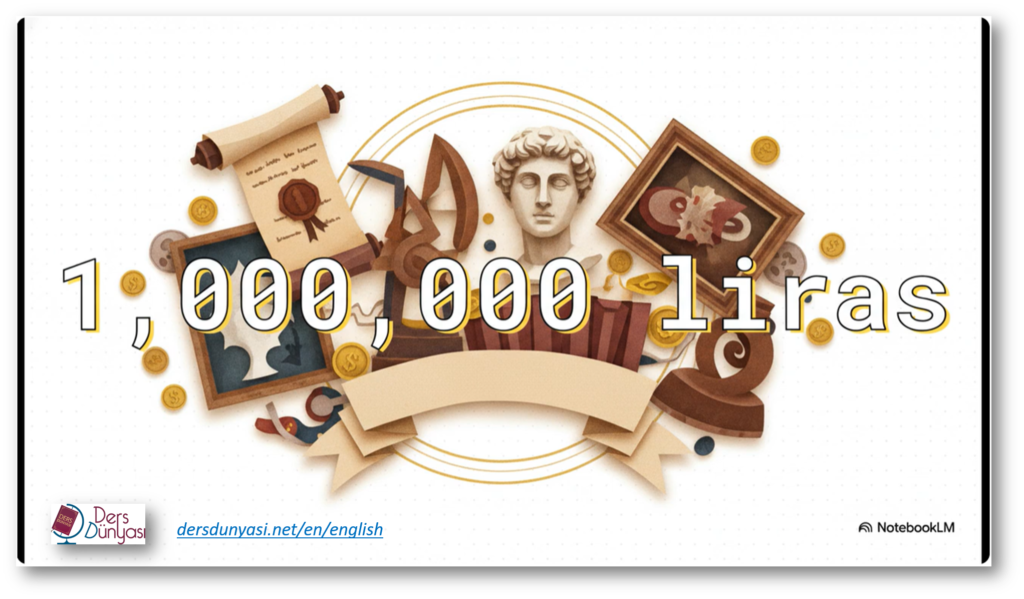
For example: among man’s arts, the value of the materials used and that of the art are entirely different. Sometimes they are equal, sometimes the material is more valuable, and sometimes it happens that five liras’ worth of art is to be found in material like iron worth five kurush. Sometimes, even, an antique work of art is worth a million while the material of which it is composed is not worth five kurush. If such a work of art is taken to the antiques market and ascribed to a brilliant and accomplished artist of former times, and announced mentioning the artist and that art, it may be sold for a million liras. Whereas if it is taken to the scrap-dealers, the only price received will be for the five kurush’s worth of iron.

Thus, man is such an antique work of art of Almighty God. He is a most subtle and graceful miracle of His power whom He created to manifest all his Names and their inscriptions, in the form of a miniature specimen of the universe. If the light of belief enters his being, all the meaningful inscriptions on him may be read. As one who believes, he reads them consciously, and through that relation, causes others to read them. That is to say, the dominical art in man becomes apparent through meanings like, “I am the creature and artefact of the All-Glorious Maker. I manifest His mercy and munificence.” That is, belief, which consists of being connected to the Maker, makes apparent all the works of art in man. Man’s value is in accordance with that dominical art and by virtue of being a mirror to the Eternally Besought One. In this respect insignificant man becomes God’s addressee and a guest of the Sustainer worthy of Paradise superior to all other creatures.

However, should unbelief, which consists of the severance of the relation, enter man’s being, then all those meaningful inscriptions of the Divine Names are plunged into darkness and become illegible. For if the Maker is forgotten, the spiritual aspects which look to Him will not be comprehended, they will be as though reversed. The majority of those meaningful sublime arts and elevated inscriptions will be hidden. The remainder, those that may be seen with the eye, will be attributed to lowly causes, nature, and chance, and will become utterly devoid of value. While they are all brilliant diamonds, they become dull pieces of glass. His importance looks only to his animal, physical being. And as we said, the aim and fruit of his physical being is only to pass a brief and partial life as the most impotent, needy, and grieving of animals. Then it decays and departs. See how unbelief destroys human nature, and transforms it from diamonds into coal.

SOURCES

Bediuzzaman Said Nursi, The Words – The Twenty-Third Word – First Chapter, The English translations of the Risale-i Nur Collection, translated by Şükran Vahide and published by Sözler Neşriyat, are an exact printed version of the original text. (erisale.com)

The Words/The Twenty-Third Word – https://www.erisale.com/index.jsp?locale=en#content.en.201.319